


We provide smart technology for homes and commercial spaces, ensuring transparent processes and optimal resource management.
CAVITY WALL · MINERAL FOAM · REVERSIBLE
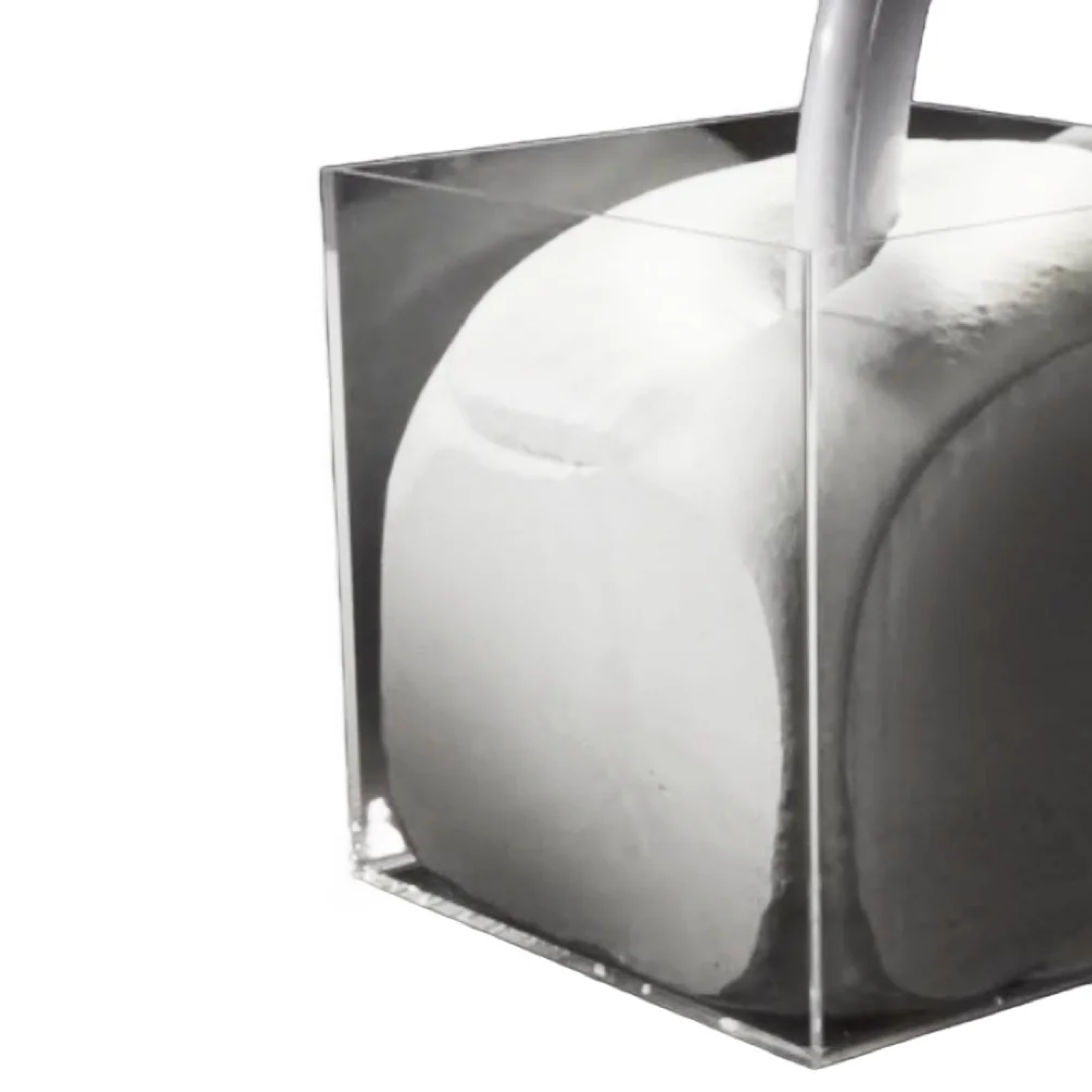
Mineral clay cavity foam · ECO4 retrofit · self-sealing 3-component fill · removable at end of life
Upgrades the wall without touching the inside
22 mm drill holes · Plugged and pointed
Reversible — pulls out with a vacuum if you ever want it gone
Unlike PIR foam · 100% recoverable cavity
A2 fire rating means it stays put if the cavity ever burns
A2-s1,D0 · Post-Grenfell compliant
Eligible for ECO4 grant funding through 2026
Approved measure · Zero-upfront route
Self-sealing foam reaches voids that beads and wool can't
Around old wall ties, debris, missed beads
Inert mineral · no off-gassing, nothing for mould to eat
Zero VOC · Alkaline mineral chemistry
Disposes with builders' rubble at end of life
No hazardous waste route · Cradle-friendly
25 year manufacturer guarantee · ETA-19/0240 certified
Borescope inspection through a 12 mm pilot hole confirms the cavity is empty, partial-fill, or fully filled with existing beads or wool. We measure the cavity width at multiple points (rarely uniform in older buildings), check for debris bridging, and confirm wall-tie condition. The survey decides whether Cavipor is a clean fill, a top-up over existing material, or whether a removal pass is needed first.
22 mm holes drilled in the mortar bed (not the brick face) on a standard 600–900 mm staggered pattern. Holes follow the bed joint so plugging is invisible after pointing. Around openings, lintels, and corners, the pattern tightens to ensure full coverage. Average 3-bed semi takes 80–120 holes across the external faces.
The three components — mineral binder, fine aggregate, and water-based foaming agent — are mixed in a continuous-flow rig on the kerb outside. The foam exits the nozzle at low pressure as a wet creamy mineral fluid, fills the cavity by gravity and capillary spread, then self-seals as the foaming agent dissipates. Cavities fill from the bottom up; the installer works the pattern in sequence.
As the foam contacts the cold cavity walls, the binder begins to set. Surface tension collapses the foam structure into a continuous mineral matrix at ~30 g/l density. The mineral grains lock around old wall ties, embed into pointing joints, and bridge minor debris. Final set is 24–48 hours depending on wall temperature and humidity. The cavity remains breathable — vapour-open, μ ~ 3.
Once the surface foam has set firm at the hole, each drill hole gets a matched mortar plug. Plugs are colour-matched to the existing pointing — lime for pre-1919 brick, sand-cement for post-war stock. From the street, a properly plugged Cavipor install is undetectable within a few weeks of weathering. We photograph every elevation before and after for the homeowner pack.
Post-fill borescope check at sample points across each elevation confirms full coverage and no slumping. The system is certified to ETA-19/0240 — the manufacturer's 25-year guarantee runs from the date of issue. For ECO4 households, CleverBloom files the grant evidence pack (photos, drill log, borescope sample images) directly with the obligated party.
1 · Continuous-flow mixing rig
Trailer-mounted unit that meters the three components in real time, mixes under low shear, and feeds the injection lance. The rig is what makes the foam consistent across a whole property — manual mixing on site can't hit the density specification. Power from a generator or a domestic 16A supply.
2 · Borescope camera
Slim 9 mm endoscope with built-in light. Used twice on every job — pre-fill to assess cavity condition, and post-fill to verify coverage at random sample points. Images go into the homeowner pack and the ECO4 grant evidence file.
3 · 22 mm SDS percussion drill
Cordless SDS hammer drill with a 22 mm masonry bit. Cuts cleanly through brick or block without spalling the face. Dust extraction shroud captures debris so the kerb stays clean — important on terraced streets and conservation areas.
4 · Injection lance and nozzles
Low-pressure injection lance with replaceable nozzles sized to the cavity width. The nozzle inserts to the back of the cavity and is withdrawn as the foam fills — a single drill hole covers roughly 0.5 m² of wall at standard 600 mm spacing.
5 · Removal vacuum (when needed)
Industrial cavity vacuum with extension wands. Removes existing EPS beads, mineral wool, or failed urea-formaldehyde foam before Cavipor goes in. Approximately 60% of grant retrofits we survey have failed or partial existing fill that needs clearing first.
6 · Mortar plug kit
Pre-mixed mortar in three standard tones — buff lime, grey sand-cement, and red-buff for stock-brick areas. Custom mixes for listed and conservation work. Plugs are tooled flush with surrounding pointing and weather in over the following weeks.
Mineral binder · primary component
A calcium-mineral binder system based on hydraulic and pozzolanic chemistry. Sets through a hydration reaction (not curing or off-gassing). Provides the alkaline matrix that holds the aggregate and resists mould growth, microbial activity, and rodent attack. Around 60% of dry mass.
Fine mineral aggregate
Sub-millimetre mineral filler that controls density and thermal conductivity. Voids around the aggregate trap still air — the actual insulator. The aggregate grading is what hits λ 0.035 W/mK at 30 g/l: lower than EPS beads, lower than blown wool, comparable to phenolic foam without the fire or off-gassing concerns.
Water-based foaming agent
The third component generates the foam structure during injection, then dissipates as the binder sets. Once the install is complete, the foaming agent is no longer present in the cavity — what remains is the mineral matrix and trapped air. Zero residual VOC. No off-gassing during occupation.
Vapour-open · μ ≈ 3
Cavipor lets the wall breathe. Water vapour passes through the foam at roughly the same rate as a lime mortar. This matters in older brick stock where moisture must be able to escape outward — a vapour-tight cavity fill in a 1930s solid-brick-outer cavity wall traps damp and risks interstitial condensation. Cavipor avoids that failure mode.
Hydrophobic mineral matrix
The set foam is vapour-open but liquid-water-resistant. Driving rain that penetrates the outer leaf runs down the inner face of the brick (as it would in any cavity) and exits at the cavity tray, rather than being absorbed by the fill. This is the opposite behaviour to old urea-formaldehyde foams that wicked moisture across the cavity.
A2-s1,d0 fire class
Non-combustible (A2), with the lowest smoke production class (s1) and zero flaming droplet rating (d0). Post-Grenfell, A2 is the threshold that allows external wall systems on buildings over 11 m without the EWS1 process. For cavity walls specifically, A2 means the cavity isn't a fire pathway between flats or floors.
25 year manufacturer guarantee
BASF Cavipor is guaranteed for 25 years from the date of certified install. The guarantee covers material performance — thermal conductivity, fire class, structural integrity of the fill. The installer (CleverBloom) is the registered system applicator on the certificate.
No annual service required
There is no moving part, no electrical component, no filter, and no consumable. The mineral matrix is set and stable. The only ongoing maintenance is the standard external-pointing inspection that any masonry wall needs — typically every 20–30 years for re-pointing in exposed areas.
Vapour-open behaviour confirmed
Post-install, the wall should behave the same way a properly empty cavity behaves — vapour passes outward, driving rain runs down the inner face of the outer leaf and exits at the cavity tray. We recommend a thermal-imaging spot-check 6–12 months after install on any property with internal damp history, included in our service plan.
Reversible · vacuum removal
Cavipor is one of very few cavity fills that can be reversed. Industrial vacuum extraction recovers ~95% of the mineral matrix. The remaining residue disposes with builders' rubble — no hazardous waste designation, no special-waste fee. This matters for properties that may be demolished, deeply renovated, or returned to an empty cavity for structural repair.
External pointing survey
Cavipor only performs if the outer leaf is weather-tight. Cracked pointing, failed render, or a defective DPC will undermine the fill's thermal performance and risk damp regardless of what's in the cavity. CleverBloom includes a free pointing condition report with every Cavipor install and quotes remedial work where needed.
MVHR companion (post-retrofit air)
A filled cavity tightens the building envelope. In houses with no extract ventilation, this can shift the moisture balance toward winter condensation on cold internal surfaces. We recommend a baseline MVHR conversation as part of any cavity-fill scope — decentralised iV-Compact or PRANA units cover most retrofit cases.


_11zon%20(1).webp)
Call us at 07526 985258
or leave your contact information below,
and we'll get back to you soon.
We provide smart technology for homes and commercial spaces, ensuring transparent processes and optimal resource management.
Working hours: Mon - Sun. 8am - 8pm
Proudly serving the entire UK!
© 2026 Clever Bloom — All rights reserved
Company registered in England and Wales / Company number: 14242566.