


We provide smart technology for homes and commercial spaces, ensuring transparent processes and optimal resource management.
EV CHARGER · TYPE 2 SOCKET · SINGLE-PORT · 3× FASTER THAN LEGACY
Fastest practical home charge on three-phase supply
22 kW · 100 miles of range per hour of charge
Works on the supply you have, fast or slow
Auto-detects 1-phase 7.4 kW or 3-phase 22 kW
Charge the car from your roof, not the grid
Modular UCP platform — same DNA as fleet chargers
Used by Volvo, Jaguar, Land Rover commercial sites
IP54 weatherproof — wall-mount inside or outside
Type 2 socket fits every modern EV in the UK
IEC 62196-2 · Tesla, BMW, VW, Ford, Polestar, all
Smart load balancing prevents tripping the main fuse
Backs off charging if oven and hob hit peak
Untethered socket — bring your own cable, change it as you change car
At install the charger reads the property's electrical supply — single-phase 230 V or three-phase 400 V. The same hardware works with either. On a three-phase supply (common in newer builds, larger homes, and most commercial premises), the unit delivers up to 22 kW at 32 A per phase. On a single-phase supply (95% of UK homes built before 2015), the same hardware caps at 7.4 kW. Auto-detection means the homeowner never has to think about it.
Untethered Type 2 socket on the unit, Type 2 cable on the car (or in the boot). Push the plug into the socket on either end first — orientation doesn't matter. The car negotiates with the charger over the Control Pilot signal (the seven-pin Mennekes standard handles vehicle-to-charger communication), agrees a charging current, then opens its battery interface. Authorisation by RFID card or smartphone app where required.
The car asks for the current it can accept; the charger delivers up to that limit. Modern EVs accept 11–22 kW on three-phase (Renault Zoe, BMW iX, Audi e-tron, Polestar 3, many newer models); older or budget EVs accept 7.4 kW (most Teslas, Nissan Leaf, BMW i3). The charger never delivers more than the car can take — there's no risk of overcharging. A 22 kW charger on a 7.4 kW car still gives a faster, more efficient charge than a 7 kW charger because the wiring infrastructure runs cooler.
Dynamic load management (DLM) reads the property's total current draw at the consumer unit and adjusts the charger's output in real time. If the oven, hob, and kettle all hit peak at the same moment as a 22 kW car charge, the charger backs off to keep total demand within the property's main fuse rating. No tripped main fuse, no DNO upgrade required for properties on a standard 80–100 A supply.
Solar PV produces during the day; in summer that's often more than the home is using. The charger reads the solar inverter's export figure and diverts surplus into the car instead of exporting at 5–15p/kWh under SEG. The car gets effectively-free fuel; the homeowner avoids importing at 30p/kWh later for the same kWh. Configurable in the OCTA app — full surplus mode, hybrid (solar plus topped-up from grid), or grid-only fast charge.
For Octopus Agile, Cosy, or Intelligent customers, the charger schedules around the cheapest hours of the day. Plug the car in at 6 PM, return to it at 7 AM fully charged — the charger picks the optimal time window inside that period to draw 22 kW. On Octopus Intelligent the tariff itself adjusts the charging schedule; the charger just receives the start/stop signal from the Octopus API.
The Octa Wall connects to the OCTA mobile app over Wi-Fi or 4G. Schedule by tariff, divert solar surplus, monitor sessions, set RFID authorisation for shared driveways. OCPP 1.6J firmware path available for landlords and small businesses who later want to bill per session — same hardware, no SKU swap.
OCTA mobile app · iOS / Android
Live view of charge session — current draw, kWh delivered, estimated time to full, cost of session at the current tariff rate. Schedule charge windows, set RFID authorisation, configure solar diversion mode. Single account supports multiple chargers — useful for households with two chargers, landlords with multiple driveways, or CleverBloom service plan visibility.
Solar diversion mode
Read the inverter's export figure and divert surplus PV into the car. Three configurable modes: full surplus only (car charges only when solar is producing more than the house uses), hybrid (solar plus grid top-up to a minimum rate), and grid-only fast charge (overrides solar diversion for a quick top-up when there's no time to wait). Switchable per session from the app.
Octopus Intelligent integration
Octopus Intelligent Go is the tariff designed for EVs — the supplier itself schedules the car's charge window, the user just sets a "ready by" time. The Octa Wall accepts the start/stop signals from the Octopus API and charges only during the cheap windows the supplier selects. Effective rate around 7p/kWh for the EV charge — roughly half the cost of standard Economy 7.
Dynamic load management
CT clamp on the property's incoming grid tail reads total current draw. Charger adjusts its output in real-time to keep total demand within the main fuse rating (80–100 A for typical UK homes). No risk of tripping the main fuse when the oven, hob, and car charge together. Critical for 22 kW installs on single-phase supplies where the headroom is tight.
RFID access cards
Each charger ships with two RFID access cards. Tap to start a session — prevents unauthorised use on a shared driveway or rented parking space. Up to 16 cards can be registered to a single charger. App-based authorisation (tap the start button in the OCTA app) works in parallel for primary household users.
Session history & reporting
Every charge session logged: timestamp, duration, kWh delivered, cost at the active tariff, charge curve. Monthly summaries downloadable as CSV for company-car-mileage reporting or expense reimbursement. Useful for the rising number of HMRC-recognised home-charging expense claims where a business pays the EV's electricity cost.
OCPP 1.6J upgrade path
The Octa Wall ships as a home charger (no billing). The OCPP 1.6 JSON firmware upgrade activates pay-per-session billing through any compliant back-office (Monta, Driivz, EV.Energy, GreenFlux). Same hardware, different role — useful when a homeowner becomes a landlord, or a small business adds employee/visitor charging.
Cloud connected · OTA updates
Wi-Fi, LAN, and optional 4G LTE connectivity. Firmware updates pushed over-the-air — new tariff integrations, refined load-management logic, new vehicle compatibility all upgrade automatically through the warranty life. The unit installed today gets meaningfully better through its three-year warranty period.
Open API · integrator-friendly
REST API exposed for integration with home-automation systems (Home Assistant, openHAB), energy-management platforms, and third-party scheduling apps. Particularly useful for tech-forward households running multi-device load balancing across heat pump, battery, EV, and hot water cylinder.
Six components make up an Octa Wall install. The Type 2 socket is what you see; the other five live inside the enclosure or in the consumer unit upstream. Each one carries out one specific job — power delivery, vehicle handshake, network, load monitoring, fault protection, earth.
1 · Type 2 socket
IEC 62196-2 socket — the European standard for AC EV charging. Seven pins: three live phases (L1, L2, L3), neutral, earth, Control Pilot (CP), Proximity Pilot (PP). The CP pin is how the car and charger talk to each other — they negotiate charging current, lock the plug, and exchange fault states in real time. Untethered means the user brings their own Type 2 cable.
2 · AC supply terminals
Three live phases (or single phase if that's what the property has), neutral, and earth. Wired in copper SWA cable from a dedicated 32 A or 40 A breaker in the consumer unit. Cable size sized to the run length — 6 mm² up to 30 m, 10 mm² beyond. Type B RCD installed in the consumer unit for DC fault protection (built-in 6 mA DC detection on the charger itself satisfies most installs).
3 · CT clamp · load monitoring
Current transformer clamp on the property's main incoming tail before the consumer unit. Measures total household current draw in real time. The charger uses this to adjust its output and prevent overload. Without the CT clamp the charger runs at fixed maximum rate — fine for properties with plenty of headroom, problematic for tight installs on a 60 A or 80 A main fuse.
4 · Earthing & PEN protection
PEN fault detection built into the unit — detects open-PEN conditions on TN-C-S supplies (the common UK residential earth arrangement) and disconnects the charger before a fault on the supplier's neutral could energise the car's chassis. Eliminates the need for an external earth rod in most installs — significant cost saving and no garden disruption.
5 · Communication network
Built-in Wi-Fi (2.4 GHz), Ethernet RJ45 port, optional 4G LTE module. Connects to the OCTA cloud for app control, OTA firmware updates, and OCPP back-office (when activated). For homes with marginal Wi-Fi at the install location, 4G LTE is the standard backup. Bluetooth used for first-connection commissioning at install.
6 · Solar inverter link
Communication link to the solar PV inverter (Solis, Fronius, SolarEdge, Sungrow, and others). Reads the inverter's real-time export figure — the kWh that would otherwise leave the property for the grid. The charger diverts that surplus into the car instead. Configured at commissioning based on the inverter brand; no extra hardware required when the inverter is on the same Wi-Fi network.
7 · Cable: Tethered vs Untethered
Untethered (Socket) — £1,439 total. Drivers bring their own Type 2 cable; the cable lives in the boot when not in use. Flexible if cars change, no permanently dangling cable on the wall, cheaper to replace if a cable gets damaged. The right pick for most households where the driver has their own cable from public charging anyway.
Tethered (with Cable) — £1,489 total. Fixed 5 m or 7.5 m Type 2 cable permanently attached. Faster plug-in at the end of every commute, no cable-in-boot routine, cleaner aesthetic when the cable is properly hooked beside the unit. The right pick when one car lives at this driveway long-term and the daily-use convenience justifies the +£50 uplift. Both variants share identical electronics, install, warranty, and OCTA app.
What OCTA covers as standard, and the two install-day decisions that determine whether the charger delivers its full warranty life. CleverBloom service plans and extended monitoring available — quoted alongside the install.
3 year manufacturer warranty
OCTA warrants the Octa Wall for 3 years from commissioning. Covers the unit electronics, the Type 2 socket, the load-management logic, and the network communication module. Spare parts hold in UK stock through CleverBloom's distributor channel. Extended warranty to 5 years available where the system is on a CleverBloom annual service plan.
PEN fault protection · no earth rod
Built-in open-PEN detection means the charger meets BS 7671:2022 amendment 2 without requiring an external earth rod. Significant cost saving (an earth rod install typically adds £200–£400 plus garden disruption) and reduces the install complexity for properties with no soft ground available.
UCP modular platform
OCTA's Universal Charge Platform (UCP) is the modular electronic architecture shared across the home Wall, dual-socket Wall, commercial Smart Wall, and Smart Wall Triple. Same diagnostics, same firmware family, same spare parts pool. Used at commercial scale by Volvo, Jaguar, and Land Rover — proven reliability at fleet operating intensity, applied to a home product.
IP54 weatherproof
IP54-rated enclosure — dust-protected and protected against splashing water from any direction. Suitable for unsheltered wall mount on a side return, garage exterior, or carport. Operating temperature −25°C to +50°C handles UK weather extremes including winter sub-zero overnight charging. No derating across normal UK temperature range.
Correct CT clamp position
The CT clamp tells the charger how much the house is using right now. Wrongly positioned — on the load side of the consumer unit instead of the supply side, or facing the wrong direction — and the charger misreads consumption and either trips the main fuse under combined load or unnecessarily backs off and slows the charge. Verified positioned correctly at commissioning.
DNO notification filed
Single-phase chargers above 3.68 kW need a G98 notification to the DNO; three-phase chargers above 11 kW need a G99 connection consent. CleverBloom files both as part of the install. Skipping this is a common cowboy-installer shortcut — and means the homeowner's insurance can refuse a claim if a fault on the charger contributes to a property fire. Verified filed at commissioning.
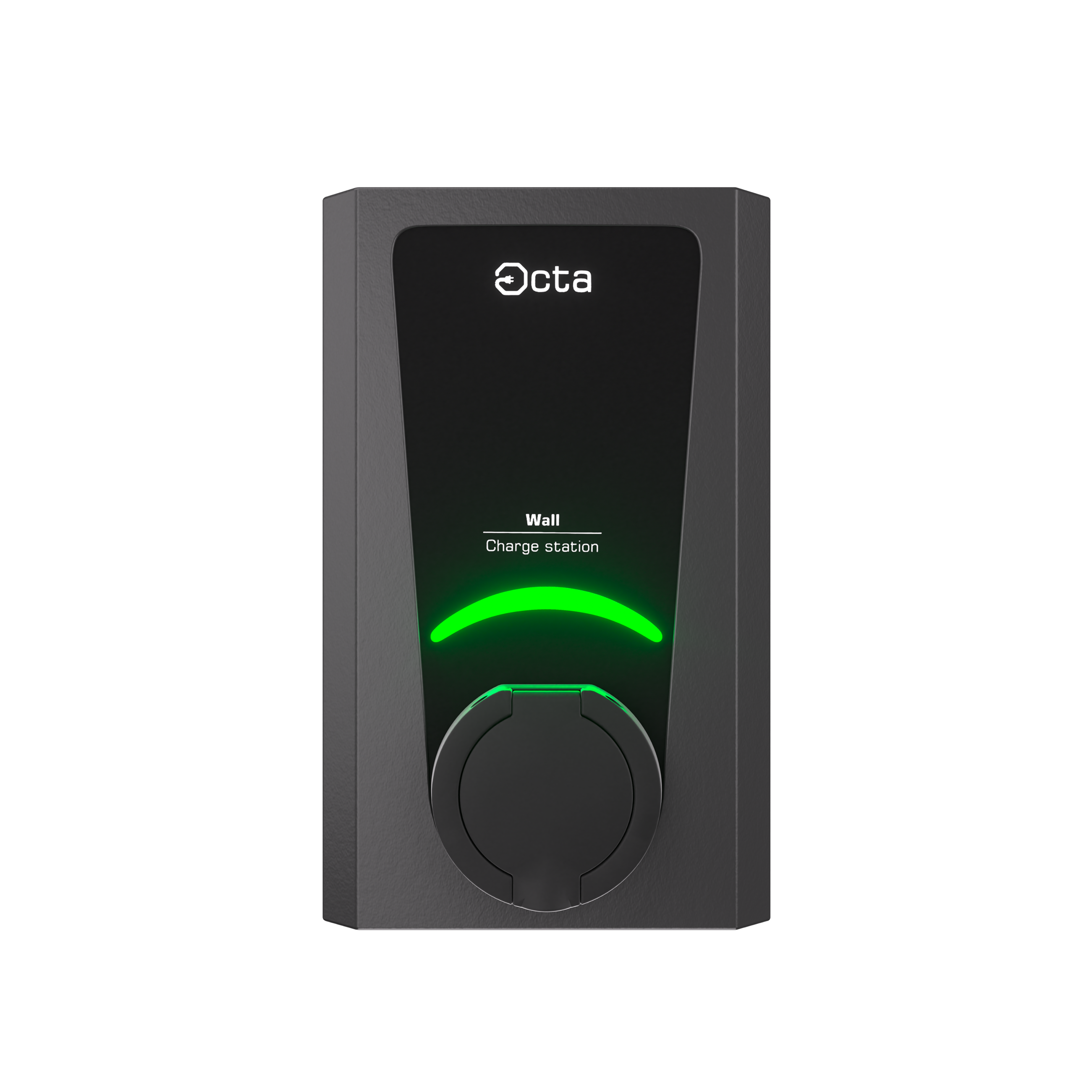
£1,489
Octa Wall 22 kW Single Tethered + dedicated circuit · fixed 5 m cable (7.5 m optional) · +£50 vs Socket variant
£1,439
Octa Wall 22 kW Single Socket + dedicated circuit · standard install · 3× faster than legacy 7 kW units on three-phase



_11zon%20(1).webp)
Call us at 07526 985258
or leave your contact information below,
and we'll get back to you soon.
We provide smart technology for homes and commercial spaces, ensuring transparent processes and optimal resource management.
Working hours: Mon - Sun. 8am - 8pm
Proudly serving the entire UK!
© 2026 Clever Bloom — All rights reserved
Company registered in England and Wales / Company number: 14242566.