


We provide smart technology for homes and commercial spaces, ensuring transparent processes and optimal resource management.
SOLAR INVERTER + BATTERY + EV CHARGER + PCS + EMS · ONE TOWER
The 5-in-1 AI tower — built for the Octopus Agile household.
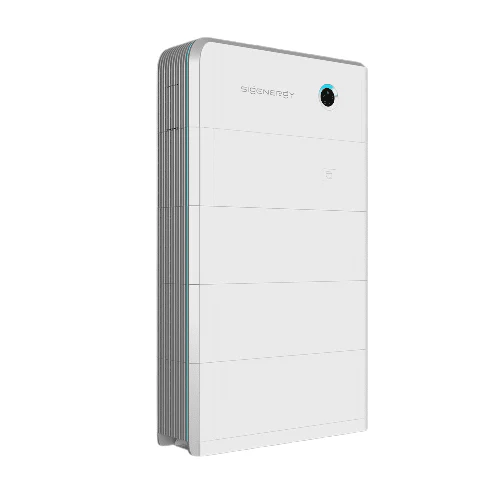
One cabinet replaces four separate boxes on your wall
Solar inverter · Battery PCS · EV charger · EMS · All integrated
AI EMS auto-trades Octopus Agile in your sleep
Buys cheap overnight · Sells at peak · Learns your patterns
Genuinely modular — start at 6 kWh, scale to 54 kWh per stack
V2X-ready DC charging — your EV becomes a power source
25 kW bidirectional · V2H during outages · V2G to grid
LiFePO₄ chemistry — 314 Ah cells, lower fire risk than NMC
100% depth of discharge — the whole battery is usable
vs ~95% on Tesla Powerwall 3 · ~85% on older chemistry
Five-level battery safety with internal fire extinguisher
Pressure relief · Aerogel insulation · Temp control · 6 strategies/pack
Designed for the architecturally-led home — not retrofit-aesthetic
Rooftop solar PV (typically Aiko Neostar 3S or LONGi HI–MO 6 Explorer panels at 5–15 kWp) feeds DC power into the SigenStor's integrated solar inverter module. Up to 30 kW PV input supported across multiple MPPT channels. DC coupling means the solar power can flow directly into the battery or the EV without unnecessary DC→AC→DC conversion losses — about 5% more efficient than AC-coupled hybrid setups.
The energy management system reads everything happening in real time: solar generation, house consumption, battery state, EV charge state, current Octopus Agile half-hourly price, weather forecast. The AI decides moment by moment whether to power the house from solar, charge the battery, charge the EV, or export to grid for revenue. Decisions made every 60 seconds, learns your usage patterns over 30–60 days.
LiFePO4 modular packs hold the energy until needed — typically 5–9 kWh per module, 1–6 modules per stack, configurable to between 6 and 54 kWh per cabinet. The battery PCS (Power Conversion System) handles DC/DC and DC/AC routing internally. 100% depth of discharge means every kWh of nameplate capacity is genuinely usable — no 10–15% conservative reserve like older battery designs.
Optional 25 kW DC EV charger module fits inside the SigenStor cabinet. Charges directly from DC battery/solar bus — no DC→AC→DC conversion. Bidirectional: the EV can be charged from the system (V2H), or the system can pull energy from the EV battery to power the house during outages or sell to the grid during expensive peak periods (V2G). Limited to V2G-capable EVs (currently Nissan Leaf, BYD Atto 3, Polestar 3 and others).
Solar surplus first powers immediate house loads — fridge, lighting, electronics, heat pump compressor, hot water. Surplus beyond house demand goes to battery first, then EV second, then grid export. During night or cloud, the battery discharges to cover the house. The system constantly arbitrates between cheap overnight grid-fill, free solar self-consumption, expensive peak-period battery discharge, and EV import/export.
When the grid fails, the SigenStor seamlessly switches to off-grid mode — within 20 ms, faster than most appliances notice. Solar continues generating (unlike grid-tied inverters which shut off). Battery continues delivering power. EV (if V2H-capable) can be tapped as additional storage. Whole-home backup supported when correctly specified. Particularly important for households in storm-prone regions, work-from-home reliability, or medical-equipment dependence.
The Sigenergy app + AI EMS together replace what would otherwise be three or four separate apps (solar inverter, battery, EV charger, energy management). One control surface, one set of credentials, one notification stream — for a system that's genuinely four products in one cabinet.
Sigenergy app · iOS / Android
Single app controls everything — solar, battery, EV charging, EMS modes, V2X. Live view of energy flows (sankey diagram showing solar → battery → house → EV → grid), monthly energy usage and revenue, tariff arbitrage tracking. Available in 30+ languages. Replaces the typical 3–4 apps that a fragmented multi-vendor system would require.
AI EMS · Octopus Agile native
Built-in support for Octopus Agile, Cosy Octopus, Tesla Energy Plan, OVO Anytime, and most UK time-of-use tariffs. Reads the half-hourly pricing API directly; no manual intervention. AI decides each half-hour: import cheap grid to fill the battery, hold battery for peak self-supply, export expensive grid revenue. Reported saving 30–40% vs flat-tariff homes with the same hardware.
Eagle-eye touch interface
Front-facing touch display shows system status at a glance — current solar generation, battery state of charge, today's revenue, current grid import/export. Side ambient lighting changes colour based on energy flow direction: green for solar surplus, amber for grid import, blue for V2G export. Architectural design language; the unit becomes a feature, not an afterthought.
Five operating modes
Self-consumption (default — use solar first, then battery, grid as last resort), Time-of-use arbitrage (AI EMS optimises against Octopus Agile), Backup (reserve battery for outages, charge from cheap grid), Manual schedule (homeowner sets fixed charge/discharge times), and Off-grid mode (full grid disconnect, for off-grid-curious properties or grid outages).
V2G scheduling
For V2G-capable EVs, schedule when the car can be tapped — typically when grid prices peak and the car has more than 70% charge. EV becomes an additional 60–80 kWh battery on top of the SigenStor's house battery. Useful during winter cold snaps when grid prices regularly hit £1–£2 per kWh for 30–60 minute peaks. Set "minimum guaranteed charge" so the car always has enough for tomorrow's commute.
Real-time energy flow visualisation
Sankey diagram in the app shows live energy flows — width of each arrow proportional to current power. Useful for diagnostic and learning purposes. Reveals patterns like "the heat pump compressor coincides exactly with peak solar generation" or "EV draw at 6 PM defeats battery savings". Awareness drives optimisation.
Smart home integrations
Native integration with Apple HomeKit (status display), Home Assistant (full control), openHAB, IFTTT, and a REST API for custom integrations. Tech-forward households running multi-device load optimisation (heat pump, EV, battery, hot water cylinder all on the same tariff-aware engine) can route SigenStor data through their broader home automation stack.
OTA firmware · improving over time
Firmware updates push over Wi-Fi or 4G LTE. New tariff integrations, refined AI EMS logic, new EV vehicle compatibility for V2X, new safety features all arrive automatically. The unit installed today gets meaningfully better through its 10+ year operating life. Sigenergy has shipped major firmware improvements quarterly since 2023.
Owner dashboard · CSV export
Monthly energy usage CSV export — solar generated, battery cycles, kWh self-consumed, kWh imported, kWh exported, revenue earned, tariff arbitrage savings. Useful for ESG reporting (small businesses), homeowner accounting, and the satisfying ritual of watching the savings stack up. The detailed breakdown justifies the premium against simpler battery products that just show "today's solar".
Six components make up the SigenStor — the five integrated modules that earn it the "5-in-1" name, plus the cable configuration choice for the EV charging module. Each module is a product in its own right that would normally live in a separate cabinet. Together in one tower they share thermal management, networking, control logic, and architectural design language.
1 · Solar inverter
Integrated string inverter handling up to ~30 kW of solar PV input across multiple MPPT (Maximum Power Point Tracking) channels. Replaces what would otherwise be a wall-mounted Solis, Fronius, or SolarEdge inverter. Same MPPT efficiency as standalone string inverters at >98%, plus the architectural saving of one less box on the wall.
2 · Battery PCS (Power Conversion System)
DC-DC and DC-AC power conversion between battery, solar, EV charger, and the grid. Handles all the routing logic — when to take from solar, when to discharge to house, when to export. PCS sits between the battery modules and everything else; it's what makes the battery actually useful rather than just a tank of DC.
3 · Battery packs (modular)
LiFePO4 battery packs with 314 Ah large-format prismatic cells. Two module sizes: BAT-6.0 (6.02 kWh) and BAT-9.0 (9.04 kWh) — both physically identical in dimensions and stack 1–6 per cabinet. Mix-and-match supported (e.g. start with 3× BAT-9.0 = 27 kWh, add a BAT-6.0 next year = 33 kWh). 6 major safety strategies per pack including fire extinguisher, pressure relief, temperature control, aerogel insulation.
4 · EMS (Energy Management System)
The AI brain. Reads solar, battery state, EV state, house demand, grid tariff, weather forecast in real time. Decides every 60 seconds where energy should flow. Learns the household's usage patterns over 30–60 days and refines decisions. The EMS is what justifies the SigenStor's premium against simpler self-consumption battery products — most batteries decide via fixed rules, the SigenStor decides via real-time optimisation.
5 · EV DC charger · optional
Optional 25 kW DC EV charging module. DC-coupled — charges the EV directly from the system's DC bus without DC→AC→DC conversion losses. Bidirectional capable: V2H (vehicle-to-home) during outages, V2G (vehicle-to-grid) during expensive grid peaks. Compatible with V2G-ready EVs (Nissan Leaf, BYD Atto 3, Polestar 3, MG, others). Adds approximately £2,500–£4,000 to the system cost; specified separately at order based on whether the household has or plans to have a V2G-capable EV.
6 · EV cable: Tethered vs Untethered
If the EV DC charger module is specified, the cable is a separate configuration choice. Untethered (Socket) — driver brings own CCS DC cable. Less common in the home market because DC cables are bulky and not all V2G EV owners carry one. Tethered (with Cable) — fixed 5 m or 7.5 m CCS DC cable factory-fitted to the SigenStor. The standard choice for residential V2X installs because of cable bulk and the integrated aesthetic of the cabinet design. +£250 for tethered configuration. Same V2G capability either way.
A premium AI-managed system needs premium aftercare — the AI EMS is what justifies the SigenStor's price, so its performance over years matters more than year-one install quality. What Sigenergy covers as standard, plus CleverBloom's specialist SigenStor service plan.
10 year manufacturer warranty
Sigenergy warrants the SigenStor for 10 years from commissioning, covering the inverter, battery PCS, EMS, and battery cells (≥80% remaining capacity guaranteed at year 10). Compares favourably with the 10–12 year industry standard. EV DC charger module covered by separate 5-year warranty. Extended warranties to 15 years available through CleverBloom's service plan.
Five-level battery safety
Internal automatic fire extinguisher (Halon-replacement aerosol), pressure relief valves on each cell, ceramic temperature sensors, aerogel insulation between cells, high-temperature-resistant cushions. Six major safety strategies operate per battery pack. IEC/EN 62619 certified for stationary storage. Particularly relevant for ground-floor or garage installs where fire egress concerns weigh on system selection.
UK installer network · still growing
SigenStor is a newer system in the UK market — Sigenergy was founded May 2022 and the UK installer network is still maturing. CleverBloom is among the early specialist installers; the upside is direct distributor relationship and faster spare-parts access, the downside is fewer "second opinion" installers nationwide compared with mature brands. Worth knowing before specifying.
AI EMS firmware updates
The AI energy management system's logic improves through firmware. Major releases roll quarterly; tariff integrations and new V2G EV compatibility ship between releases. The unit gets meaningfully better through its 10-year warranty life. CleverBloom monitors the rollout and flags significant updates to homeowners — particularly when a new feature might warrant a settings tune-up.
AI EMS learning-phase oversight
The AI EMS needs 30–60 days to learn a household's patterns before time-of-use arbitrage runs at full effectiveness. During this window, sub-optimal decisions can cost real money — particularly on Octopus Agile where wrong-time imports get expensive. CleverBloom's specialist service plan includes a 30-day check-in at the end of the learning phase to verify the system has settled into the right operating pattern.
Tariff drift quarterly review
Octopus Agile and similar dynamic tariffs change pricing curves over time — the savings model that worked in year one might not be optimal by year three. Quarterly review against the actual energy bill (included in CleverBloom's specialist service plan) catches drift. Particularly important for households where the AI EMS arbitrage savings are a material part of the original system business case.
POA
Multi-stack commercial scope · 60 kWh to 100+ kWh systems · light commercial premises, small workplace solar+storage projects · Sigenergy direct quote routed through CleverBloom
£12,000–£25,000
Indicative installed range · typical home stack of 9.04 to 27.12 kWh battery + 11.5 kW inverter + EMS · before EV DC charger module · POA – site-specific quote at survey



_11zon%20(1).webp)
Call us at 07526 985258
or leave your contact information below,
and we'll get back to you soon.
We provide smart technology for homes and commercial spaces, ensuring transparent processes and optimal resource management.
Working hours: Mon - Sun. 8am - 8pm
Proudly serving the entire UK!
© 2026 Clever Bloom — All rights reserved
Company registered in England and Wales / Company number: 14242566.