


We provide smart technology for homes and commercial spaces, ensuring transparent processes and optimal resource management.
HYBRID INVERTER · SINGLE-PHASE · 2-MPPT · BATTERY-READY
Sized for the 95% of UK homes on single-phase supply
5 kW G98 · No DNO pre-approval needed
Two MPPTs handle split-string and shaded roofs
East/West · North/South · Or shaded splits
Take the panels with you when you change battery
Up to 8 kWp of panels on a 5 kW inverter
160% PV oversizing supported
Silent fanless design — install in any room
Arc-fault protection built in as standard
AFCI · DC arc detection · Automatic shutoff
Keeps essential loads running through outages
5 kW backup · 20 ms grid-fail switchover
SolisCloud monitoring · Bluetooth commissioning
Solar panels produce direct current (DC); homes run on alternating current (AC). The hybrid inverter is the bridge — it takes DC from the array and converts it to AC matched to the UK grid waveform (230 V, 50 Hz). The S6-EH1P does this at 97.6% peak efficiency, meaning less than 3% of the panel's generation is lost in conversion. The result is mains-grade electricity ready for the home's consumer unit.
Two independent MPPT (Maximum Power Point Tracking) algorithms run in parallel — one per string. Each tracker continuously adjusts the operating voltage and current of its string to extract the maximum power from the panels under whatever conditions exist right now (irradiance, temperature, partial shade). Two MPPTs means an east-and-west split roof, or a shaded-and-unshaded split, can each run at their own optimal point without dragging each other down.
The S6 is a hybrid inverter — it also controls the home battery. Solar surplus charges the battery first, then exports. Evening peak discharges the battery to displace expensive grid import. Six-stage timed charge/discharge means the system can also charge from cheap overnight grid power on an Octopus Agile tariff and discharge through the morning. The inverter is the brain that decides which source feeds the home at any moment.
When exporting, the inverter must match the grid's voltage, frequency, and phase exactly — out by a single degree and the grid protection trips. The S6 holds synchronisation continuously, with anti-islanding protection that disconnects automatically within milliseconds if the grid drops out. G98 compliance (required for 5 kW single-phase installs) is certified to the UK Engineering Recommendation by an independent test laboratory.
Paired with a compatible battery and an external EPS port, the S6 switches from grid-tied to off-grid operation within 20 milliseconds when the grid fails. The home's essential loads (lights, fridge, internet router, heating circulation pump) continue running on stored battery energy plus live solar generation. When the grid comes back, the inverter re-synchronises automatically and resumes normal grid-tied operation.
AFCI (Arc Fault Circuit Interrupter) protection scans the DC strings continuously for the electrical signature of an arc fault — a degraded connection in the rooftop wiring, a corroded MC4 connector, or a damaged panel ribbon. If detected, the inverter shuts down the affected string within milliseconds before the arc can ignite roof timber. Built in as standard, not a paid-for upgrade.
The S6-EH1P ships with SolisCloud — the iOS and Android app plus web portal for monitoring, scheduling, and remote diagnostics. Bluetooth used for first-connection commissioning at install; Wi-Fi or 4G handles ongoing cloud connection. Six time-of-use slots per day let the inverter optimise around any tariff structure.
SolisCloud app · iOS / Android
Live view of solar generation, battery state of charge, home consumption, grid import and export — refreshed every five minutes. Configure schedules, view yearly savings, check inverter health. A single account supports multiple installations — useful for landlords, multi-property owners, and CleverBloom service plan visibility.
Six time-of-use slots
Six independent charge/discharge windows per 24-hour day. Schedule overnight battery charging on Octopus Agile (typically 23:30–05:30), prevent battery discharge through cheap-grid hours, force discharge through evening peak. Different schedules for weekdays vs weekends. All configured once in the app, then runs automatically.
Three operating modes
Self-use mode (priority: PV → home → battery → grid) is the default for solar self-consumption. Feed-in mode (priority: PV → home → grid → battery) suits high SEG-tariff export scenarios. Backup mode keeps the battery topped up for grid resilience. Switch between modes seasonally from the app.
Export power control
Set an export limit in the app — 0 W for zero-export (full self-consumption), 3.68 kW for G98-compliant limited export, 5 kW for full G99 export. Critical for properties on constrained DNO connections where the grid will only accept a capped feed-in. Adjustable post-install if export consent changes.
Battery-source charging
Charge the battery from any source: solar (default), grid (cheap-overnight tariff), or generator (off-grid backup). The S6 supports an independent generator interface for properties on overhead supply where extended outages are common. Selectable per time-slot — solar by day, grid overnight, generator only during outage.
Real-time energy monitor
Live kWh visibility across solar, battery, grid, and home consumption. Compare seasons, identify the appliances driving consumption, see exactly where the savings come from. Particularly useful in the first three months after install to validate that the system is performing as quoted and to fine-tune the charge/discharge schedule.
Remote diagnostics by Solis
Solis monitors connected units remotely from their service centre. Most warranty cases can be diagnosed without a site visit — MPPT performance, battery communication, grid waveform, all visible to the manufacturer. Faster fixes, lower service cost, longer system life. UK service partner network for hardware swap-outs where needed.
Bluetooth + Wi-Fi + 4G
Bluetooth for first-time commissioning at install — works even before the home Wi-Fi is reachable. Wi-Fi and LAN for ongoing cloud connection. Optional 4G module for properties with marginal Wi-Fi reliability or no broadband. RS485 and CAN ports for integration with third-party energy management systems.
Parallel up to 48 kW
Up to six S6-EH1P units can run in parallel — single-phase or three-phase, up to 48 kW combined output. Used for higher-consumption homes that have outgrown a single 5 kW unit, or for HMO and small-commercial rooftops where a single string inverter would be undersized. Lower cost per kW than stepping up to a single high-power three-phase unit.
An inverter is a hub. Eight components terminate at the S6-EH1P — two solar strings, the home battery, the grid, the consumer unit, the EPS backup output, the communication network, and the energy meter. Each one serves a specific role in the system. Same map shown in the pricing section below — what's terminated where, what each port does.
1 · PV string A (MPPT 1)
First solar string input. Accepts a string of 8–14 Aiko Neostar 3S panels in series. Independent MPPT tracker means this string can run a different orientation (east-facing, for example) or different shade condition from string B without affecting either's output. Max input voltage 600 V DC, max input current 15 A.
2 · PV string B (MPPT 2)
Second solar string input, fully independent of string A. Used for east-west split arrays, dormer-and-main-roof splits, or shaded-vs-unshaded portions of the same roof slope. Or used for a phase-2 expansion when more panels are added to the system months or years after commissioning. Same max input voltage and current as string A.
3 · Battery port
Low-voltage DC battery interface. Compatible with most popular UK LiFePO4 batteries — Pylontech, Fox, Dyness, Solax-branded, Tianpower, and many others. Communications over RS485 or CAN ensures the inverter knows the battery's state of charge, temperature, and cell health continuously. Battery brand selectable in the SolisCloud app at commissioning.
4 · Grid AC port
Single-phase 230 V AC connection to the home's consumer unit. Hands solar and battery power into the household electrical system, also imports from the grid when needed. Integrated DC and AC isolators on the inverter chassis — no separate isolator cabinet required.
5 · EPS backup output
Separate AC output that stays live during a grid outage. Wires into a dedicated essential-loads circuit (or to a whole-home backup gateway) so critical appliances keep running when the grid drops. Maximum 5 kW backup power — enough to run lights, fridge, internet router, heating circulation pump, and home office simultaneously during an outage.
6 · Energy meter (CT clamp)
Current transformer clamp on the incoming grid tail at the consumer unit. Measures real-time house consumption and grid import/export. The inverter uses this to decide when to charge, when to discharge, and when to export. Without the CT clamp the inverter is blind to consumption and falls back to fixed-schedule mode — verified positioned correctly at commissioning.
What Solis covers as standard, and the two install-day decisions that determine whether the inverter delivers its full warranty life. CleverBloom service plans and extended monitoring available — quoted alongside the install.
10 year manufacturer warranty
Solis warrants the S6-EH1P for 10 years from commissioning as standard — at the upper end of typical residential string-inverter warranties. Optional extension to 20 years available where the system is on a CleverBloom annual service plan. Covers the inverter electronics, the MPPT trackers, the battery interface, and the EPS contactor. Parts and labour included.
Fanless design · no moving parts
Natural convection cooling, no fans. Fan-cooled inverters typically need fan replacement at year 7–10; the S6 has no moving parts to wear. Silent operation means the unit can sit in a hallway, utility room, or even a living-space cupboard without noise complaints. Lower lifetime maintenance burden than any fan-cooled equivalent.
AFCI arc-fault protection
Built-in arc-fault circuit interrupter scans the DC string continuously for the electrical signature of an arc — a degraded connection, a corroded MC4, a damaged panel ribbon. Auto-shutoff before the arc can ignite roof timber. Required by some UK insurers for high-value or thatched properties; included as standard rather than a paid optional extra.
SolisCloud lifetime monitoring
Solis cloud monitoring is provided free for the life of the inverter — no subscription, no annual fee. Performance data, fault history, and remote diagnostics all available through the SolisCloud platform. OTA firmware updates pushed automatically through the 10-year warranty life. The inverter installed today keeps getting better through its design life.
Correct CT clamp position
The CT clamp tells the inverter how much the house is using right now. Wrongly positioned — on the load side of the consumer unit instead of the supply side, or facing the wrong direction — and the system misreads consumption and exports surplus instead of self-consuming. A 30-second installer detail that determines whether the system saves money or wastes it. Verified at commissioning.
Inverter location and clearance
The S6 dissipates heat through its enclosure walls. Mounted in a sealed cupboard with no ventilation, or directly above a heat source, the unit will derate in summer — outputting less than its rated 5 kW on the hottest days when solar is producing the most. Manufacturer specifies 200 mm clearance on every side, mounted vertically. Verified at survey before final install location is fixed.
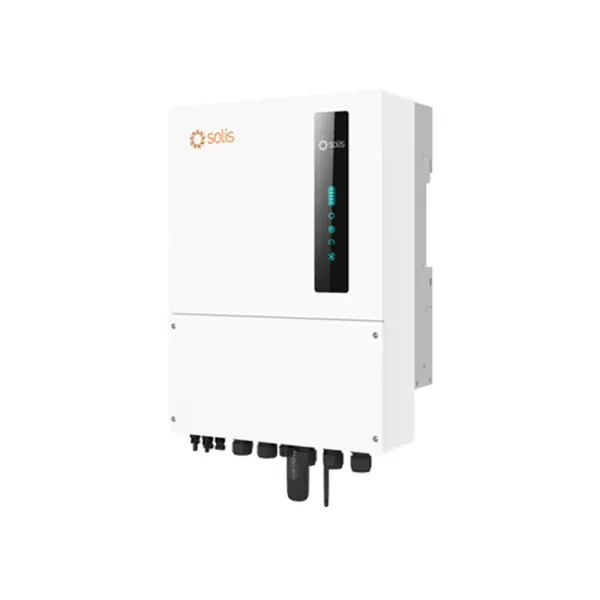
£1,400
Catalog headline · S6-EH1P 5K-L unit · delivered to site · no install labour included
£2,400
Inverter portion of a coordinated solar + battery install · 0% VAT until March 2027 · includes commissioning labour share


_11zon%20(1).webp)
Call us at 07526 985258
or leave your contact information below,
and we'll get back to you soon.
We provide smart technology for homes and commercial spaces, ensuring transparent processes and optimal resource management.
Working hours: Mon - Sun. 8am - 8pm
Proudly serving the entire UK!
© 2026 Clever Bloom — All rights reserved
Company registered in England and Wales / Company number: 14242566.