


We provide smart technology for homes and commercial spaces, ensuring transparent processes and optimal resource management.
INTERNAL WALL · AEROGEL LINER · 13 mm SYSTEM
Aerogel internal wall insulation · 13 mm total build-up · for listed buildings where every millimetre matters
Industry-lowest thermal conductivity in any building insulation
λ 0.015 W/mK · Aerogel
13 mm achieves what 50–80 mm of mineral wool would
3–5× thinner · Room volume preserved
Cornices, ceiling roses, and architraves stay where they are
Original heritage details preserved
Plasters direct — finishes like a normal wall
No vapour barrier · Paint, paper, or panel
Specified by heritage architects on listed-building consents
Track record · LBC pre-app friendly
Magnesium silicate carrier — alkaline, mould-resistant
Non-organic substrate · No microbial food
Hydrophobic aerogel — repels liquid water, passes vapour
Vapour-open assembly · μ ≈ 5
Made in Scotland by Proctor Group · 25 year design life
Aerogel is roughly 95% air, held inside a silica matrix with pores smaller than the mean free path of an air molecule. Convection can't occur in a pore that small. Conduction through the silica network is minimal because there's so little of it. The result is a thermal conductivity of 0.015 W/mK — the lowest of any commercial building insulation, beating PIR (0.022) and mineral wool (0.040) by a wide margin.
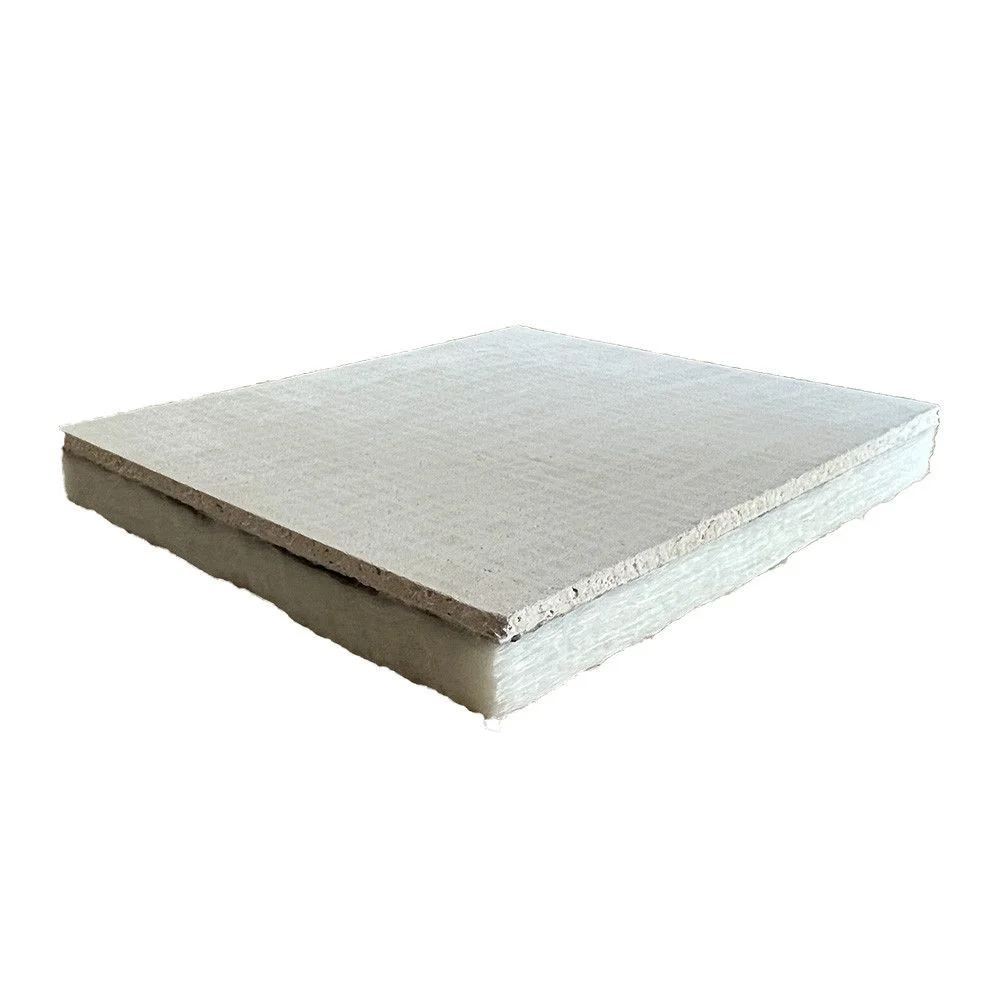
A 10 mm Spacetherm aerogel blanket is laminated to a 3 mm magnesium silicate carrier board to make Spacetherm WL Wall Liner. The carrier gives the system a workable face — boards cut with a fine-tooth blade, fix mechanically, butt-jointed, taped, and plaster-skimmed direct. Without the carrier, the raw aerogel blanket is too soft to plaster.
Spacetherm WL is internal wall insulation — applied to the room face of the external wall, behind the new plaster line. The original masonry sits outside the new thermal envelope, which protects the heritage external appearance entirely. From the street, nothing changes. From inside the room, the wall moves inward by 18–25 mm (board plus plaster).
In a Georgian or Victorian room, original cornices, ceiling roses, panelling, picture rails, and architraves are part of what makes the property significant. Standard IWI build-ups at 50–80 mm sit proud of these mouldings and force them to be removed, returned at finish, or boxed around. At 13 mm, Spacetherm WL slips behind without disturbing them.
The hydrophobic aerogel rejects liquid water but lets vapour pass. At μ ≈ 5, the system is vapour-open enough to avoid interstitial condensation in most standard solid-wall assemblies — no internal vapour barrier needed. WUFI or condensation-risk modelling is included for projects with unusual moisture loads (kitchens, bathrooms, high-occupancy rooms).
Heritage IWI is rarely a whole-house exercise. It targets the rooms and elevations where occupant comfort is most affected — typically the master bedroom on the north elevation, the cold front reception room, the dressing room above the through-passage. The scope is the elevations that matter, not every wall in the house.
1 · Substrate prep
Existing internal plaster removed back to masonry. Loose pointing made good. Any salt-affected brick treated. Old gloss paint mechanically abraded. The substrate condition matters more than the insulation specification — a damp brick wall hidden behind aerogel becomes a more expensive damp brick wall.
2 · Salt and damp survey
Listed and pre-1919 stock often has hidden salt loading at low level from historic rising damp episodes. We test for hygroscopic salts before fixing the WL boards. Affected areas may need a salt-neutralising render system at low level before WL goes up — quoted separately based on the survey findings.
3 · Adhesive bed
Gypsum or cement-based adhesive applied to the back of each board, full-coverage on uneven substrates. Boards pressed into the bed, plumbed, levelled, butted close at joints. The adhesive sets within hours; mechanical fixing follows.
4 · Mechanical fixings
Polymer plug-and-pin fixings drilled through the board face into the masonry beyond — typically 4–6 per board depending on board orientation and wall condition. Fixings are flush-set into the magnesium silicate face and disappear under the plaster skim.
5 · Joint reinforcement
Self-adhesive scrim tape over every butt joint and at the perimeter where the WL meets the original wall plane. The scrim and the magnesium silicate face together give the plasterer a continuous, paper-faced surface to skim.
6 · Plaster finish
Standard gypsum plaster skim (Thistle Multi-Finish) or a vapour-open lime plaster where conservation requirements specify. Both bond directly to the magnesium silicate carrier. Finished thickness 2–3 mm. Decorate as normal wall — paper, paint, panel mouldings reinstated.
Aspen Aerogels Spaceloft blanket
The aerogel component is Aspen Aerogels' Spaceloft — a flexible aerogel blanket originally developed for industrial process insulation. Aspen has been making aerogel blanket commercially since the early 2000s; the technology is mature, not experimental. Proctor Group licenses Spaceloft for the wall-liner laminate.
Silica nanoparticle matrix
The aerogel structure is amorphous silicon dioxide arranged in nanoscale strands enclosing pore sizes of 20–40 nanometres. Each pore is smaller than the mean free path of an air molecule (~70 nm at room temperature), which is why convection inside the matrix is effectively zero.
Hydrophobic surface treatment
The aerogel is surface-treated to reject liquid water while remaining vapour-open. Raw silica aerogel is naturally hydrophilic; the treatment is what makes Spaceloft viable in a building envelope where condensation and accidental wetting are part of normal service.
Magnesium silicate carrier · 3 mm
The carrier board is a magnesium silicate composite — alkaline, non-organic, mould-resistant, and dimensionally stable. Cuts with a fine-tooth blade. Takes plaster directly. The alkaline chemistry means no microbial food source, which matters in unheated heritage rooms with intermittent occupation.
Lamination bond
The aerogel blanket is mechanically and adhesively bonded to the magnesium silicate carrier at the factory. The bond is permanent and continuous — no air-gap, no delamination over time. Boards arrive on site as finished WL assemblies ready to cut and fix.
Fire: Class C (board) / Bs1-d0 (system)
Spacetherm WL Wall Liner is Euroclass C as a board. When installed behind plaster as a complete internal wall system, the assembly tests Bs1-d0 — the plaster face is what's exposed to the room. Suitable for buildings under 11 m external wall height. For higher buildings, Proctor Group's Spacetherm Slentex variant (Euroclass A2) is the route.
25 year design life
Proctor Group publishes a 25-year design life for Spacetherm WL in standard internal wall service. The aerogel matrix is chemically stable silica — it doesn't degrade, off-gas, or shed fibres over time. The magnesium silicate carrier is similarly stable. In normal service, the assembly should outlive the next two redecorations and several boiler replacements.
Decorate as a normal wall
Once plastered, the wall behaves like any plastered wall. Paint, wallpaper, hung pictures, fixed shelving — all supported, all reversible. Heavy fixings (full shelving units, kitchen wall cabinets) need fixings through the aerogel into the masonry beyond, same way as any plaster-on-brick wall.
No annual service required
No moving part, no electrical component, no filter, and no consumable. Standard plastered-wall maintenance only — touch up dents and paint marks, replace decoration on the homeowner's normal cycle. The aerogel core needs nothing.
Reveal and soffit cold-bridge strip
A wall-plane IWI scope without insulated reveals fails its U-value calculation around windows. Spacetherm CBS (Cold Bridge Strip) wraps reveals, soffits, and lintels with a thinner aerogel detail to break the bridge. Without it, condensation appears around windows on cold mornings — exactly the symptom the IWI scope was supposed to fix.
Salt and damp baseline
Hidden salt loading at low level on pre-1919 stock is the single biggest cause of IWI failure in heritage retrofit. We run a salt-and-damp survey before fixing any boards; affected areas get a salt-neutralising render at low level before the WL goes up. Skip this step and the IWI traps the salt cycle behind a sealed face.
Heating system rebalance
An IWI'd room loses heat far more slowly than it did before. The existing radiator (sized for the pre-insulation heat loss) is now oversized; the room overheats. We rebalance the heating system on completion — typically a quick valve adjustment, occasionally a radiator downsize. Included for one-room scopes; quoted separately for whole-floor scope.
POA
40 m² boards plus reveal strips · delivered to UK site · install not included
POA
40 m² IWI scope · Grade II Victorian first-floor bedroom suite · two external elevations


_11zon%20(1).webp)
Call us at 07526 985258
or leave your contact information below,
and we'll get back to you soon.
We provide smart technology for homes and commercial spaces, ensuring transparent processes and optimal resource management.
Working hours: Mon - Sun. 8am - 8pm
Proudly serving the entire UK!
© 2026 Clever Bloom — All rights reserved
Company registered in England and Wales / Company number: 14242566.